01
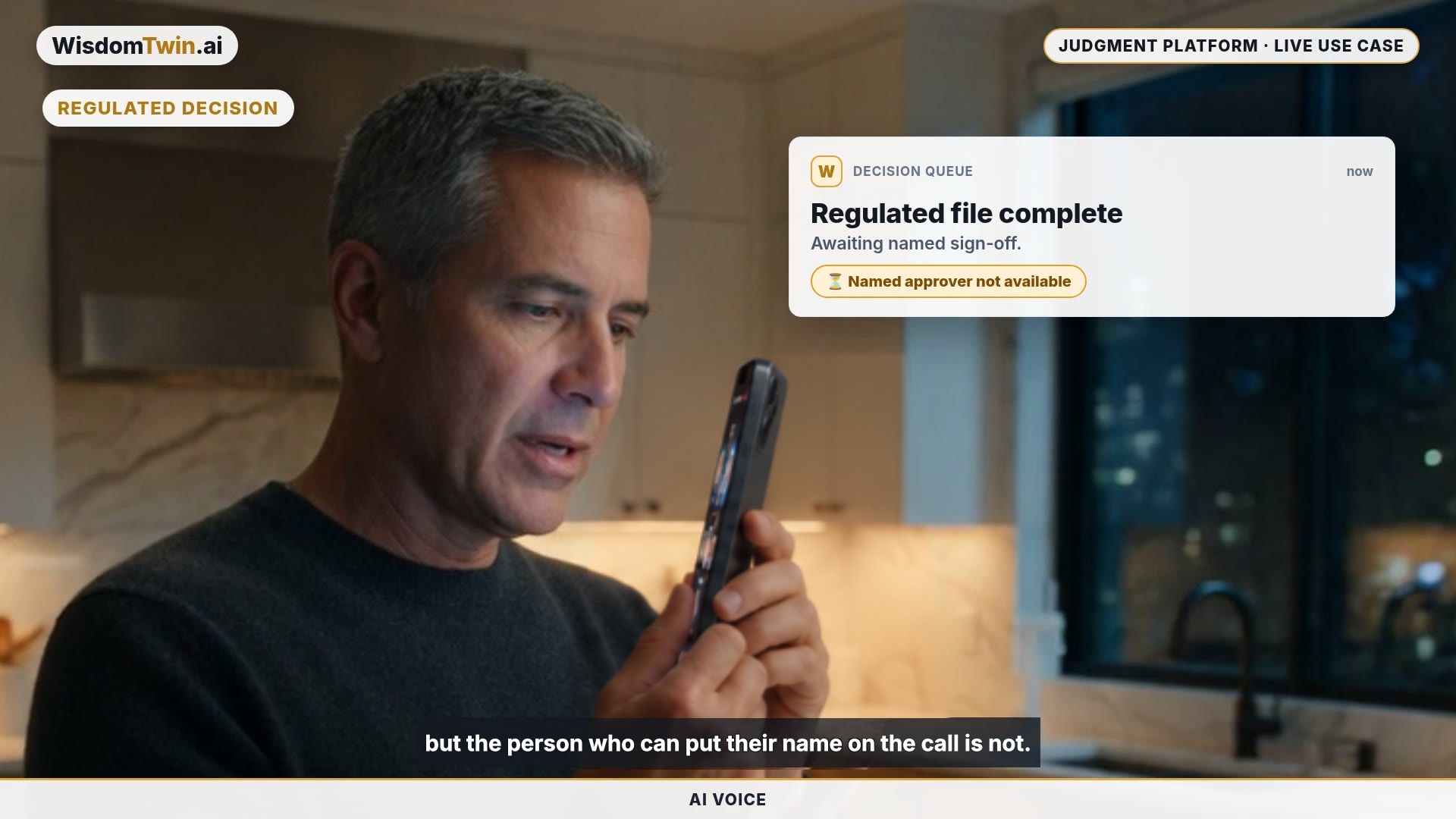
The Named Call (78 seconds)
1:18ExecutivesRisk and ComplianceFinal review
What it shows: A Judgment Twin brings a regulated decision to the named approver.
What to watch for: How the decision reaches the person who can put their name on it.
Explore founder-built demonstrations of role judgment, authorized evidence, explicit limits and named human release. Register once to watch any demo.
Watch a Judgment Twin handle a live enterprise decision.
What it shows: A Judgment Twin brings a regulated decision to the named approver.
What to watch for: How the decision reaches the person who can put their name on it.
What it shows: The full WisdomTwin.ai demo reel: a live question, the role judgment, the evidence and limits, and a named human release.
What to watch for: Where the named human stays accountable.
What it shows: A procurement decision moves with evidence attached, escalates where authority runs out, and safely declines what it should not decide.
What to watch for: The Safe Decline.
What it shows: Why prepared decisions wait for the room, and what changes when governed judgment is available while the question is live.
What to watch for: The gap between decision readiness and attention.
What it shows: Five role-specific Wisdom Twins convene on one board-level decision. Evidence attaches to each position, dissent stays on the record, a low-confidence call is withheld and routed to a named human, and the board package assembles with its audit trail.
What to watch for: The low-confidence judgment that is withheld and sent to a person.
What it shows: Explore five sample access-review cases. Inspect the evidence, see why a policy check passes or blocks the packet, and simulate release by a named human.
What to watch for: A complete evidence package can still be blocked when the requester is also the approver.
What it shows: Five access-review cases. Evidence, policy checks, named release, append-only audit.
What to watch for: A complete packet still needs a named human to release it.
What it shows: A sample banking walkthrough: assemble the evidence, identify what is missing, review an internal draft, and keep account actions with an accountable human.
What to watch for: The missing chronology, the human approval gate, and the account action the twin declines.
What it shows: A sixty-page government RFP lands with a Friday deadline and the sales lead is unavailable. His role twin reviews prior proposals and compliance requirements, drafts a first response, and escalates only pricing and legal exceptions to him.
What to watch for: The two exceptions the twin does not decide on its own.
What it shows: Regulated teams wait for the expert, rebuild the context, and schedule another meeting while the question is still live. This film shows what changes when role judgment, evidence and the escalation path arrive together.
What to watch for: Where the named human stays accountable.
What it shows: The before state, the after state, and the three pillars that connect them: One-Press Huddle, role-specific Wisdom Twins, and the Trust Layer.
What to watch for: The Ingest, Twin, Operate flow.
What it shows: The same RFP scenario as the product demo, framed side by side so the difference between reconstructing context and receiving governed judgment is visible in one view.
What to watch for: What changes between the two sides.
What it shows: One facilitator and six role twins at a sample financial firm set an agenda, assign a thirty-day plan, and put three decisions in front of human sign-off.
What to watch for: The three decisions held for sign-off.
What it shows: Roman Bodnarchuk introduces why WisdomTwin.ai is building governed judgment for regulated enterprises.
What to watch for: The problem the company is focused on.
What it shows: A short sample look at a compliance gate in a banking workflow.
What to watch for: The policy check before any action.
What it shows: Two sample scenarios, a commercial bank covenant waiver and an insurance claim escalation, built for risk and claims leaders.
What to watch for: How exceptions are escalated.